Wednesday, July 15, 2009

Maiden Extremes

I enjoy writing about the horses whose careers and modest achievements may never capture broader attention. Smoochie Hoochie is such an animal.

This 5-year-old mare (E Dubai-Hoochie Coochie, by His Majesty) broke her maiden at Colonial Downs on Tuesday—in her 26th attempt. Over the past year, in the six previous races that she actually completed, Smoochie Hoochie has lost by a total of 110 lengths—just over 18 lengths per race—all maiden claiming events, on turf and dirt, at various tracks, from 5.5f to 8.5f. So, why did she win now? Maybe because she was finally dropped down to $5k claimers, after running mostly for $25k—when she was a $7k FTM October 2005 purchase. Talk about an owner in denial. Smoochie Hoochie paid $68.80 for the win with Malcolm Franklin up, in a field of 14.

On the other extreme, at Belmont on Wednesday, some pricey 2-year-old filly maidens make their debuts going 5f. The combo of Kiaran McLaughlin and Alan Garcia send out Genuine Charm, a $350k Keeneland yearling purchase by Dixie Union out of the A.P. Indy mare Alluring—daughter of the great race mare Educated Risk. Mark Henning and Rajiv Maragh team up with Dattt Echo, a $360k Keeneland yearling by Stormy Atlantic out of the Coronado’s Quest mare Rehear; she’s a three-quarters sister to G1 Spinaway victress Mani Bhavan. However, the filly that’s caught my eye is Je Ne Sais Quoi, by Elusive Quality out of the Argentinean multiple G1-placed Southern Halo mare Galeta. She’s a half-sister to G1 Matron runner-up Lokoya, and has posted some extremely fine workouts for Jimmy Toner in anticipation of this start, with Edgar Prado up. With the tragic loss of Sailor’s Cap last month, the Toner stable is owed some good karma.

Finally, for hunch bets on Wednesday, how about Curie (as in dual Nobel prize winner Marie) who runs in race 2 at Charles Town, combined with Uranium (yes, I know it was radium, but...close enough) in race 7 at Arlington?

Tuesday, July 14, 2009

Winning the Race Without Sacrificing the Sport

Flipping through channels late Sunday night, I stumbled across a silent film classic on TCM that struck an unsettlingly familiar chord, one worthy of further reflection.

In “The First Auto” (1927), Hank Armstrong is a livery stable and thoroughbred racehorse owner who, in 1895, is unwilling to confront the reality that the horseless carriage or automobile is supplanting his beloved horse. His own son betrays him by becoming fascinated with the new-fangled machine, and the entire film is a study in the “past” vs. the “future”— tradition vs. modernity. It’s definitely a movie for antique car buffs and those interested in early automobile racing (pioneer racer Barney Oldfield makes a cameo as himself).

While the film presents Hank Armstrong as a compassionate horseman, he is obviously the “villain” for disowning his son and angrily mocking his friends who show interest in the automobile. Yet, I couldn’t help but feel great empathy for him as his champion race mare Sloe Eyes dies giving birth to a filly; in palpable anguish, he awakens his son Bob to tell him “Sloe Eyes is dead.” His son’s apathetic response: “Gee, Dad—that’s too bad” as he rolls over to go back to sleep.

Later in the film, when provoked by Joe Saunders, Hank bets $100 that Sloe Eyes’ filly Bright Eyes can defeat an auto in a contest at the fair grounds, and folks turn out to watch the match race. As the buggy drawn by the trotting filly pulls away, Hank mockingly yells back to Joe, “Hurry up, Progress—don’t keep me waitin’!”

He feels complete vindication with the race won, but in puzzlement asks his friend as the crowd swarms past him and towards the defeated car, “What are they doin’ over there—don’t they know we won?” Prophetically, his friend says, “Sure, Hank, but it’s nothing to see a buggy go with a horse—the wonder is to see a buggy go without a horse!”

No one can argue that the horse holds the same relevance it once did. The agrarian culture of nineteenth century America is long in the past; the heyday of horse racing ended when the nostalgic memory of the horse’s fundamental, daily importance to pre-industrial humanity faded. Never again will the sport possesses the popularity it once did, with tens of thousands regularly flocking to the tracks and millions more voraciously reading turf writers’ accounts of the races and star horses.

What we are left with is a smaller core audience made up of dissimilar groups of individuals who, at times, find intersections in their interests. The secret for the powers-to-be to insure that the sport of horse racing survives the next century is to learn to properly and individually address the needs and desires of each of those groups.

There are those I’ll call the Legacies, those individuals whose heritage or family ties are bound to the sport—owners and breeders, yes, but also trainers, jockeys, grooms, veterinarians and all those associated with the care of these animals. Not being intimate with any of these groups, I dare not presume their fundamental concerns, although I suspect they would include, most basically, the viability and profitability of the industry. Insuring one can make a good living doing what one loves, and doing it safely, with concern for the overall well-being and health of the animal. And, yes, hopefully drawing in new owners and others who grow the sport, even if very marginally.

Then there are the Horseplayers whose interests in the sport chiefly lie in wagering. Since their gambling options today are more numerous—poker, slots, sports betting of all kinds, etc.—horse racing needs to draw in and maintain this group. Making wagering more economically attractive through lower takeouts, a wider variety of wagers implemented in a more uniform way from track to track, and by putting forth a stronger product with larger, more competitive fields. Also important is education and information, facilitated through better use of technology and abandoning the practice of “nickel-and-diming” customers. By no means is this list comprehensive—these are just some of the rudimentary issues that need to be addressed.

The group that horse racing most ignores is the Fan. Some may find it impossible to wrap their mind around this concept, but there are actually those who love the sport without placing wagers. Whether or not they are financially contributing to the same extent as the Horseplayers isn’t the issue, nor does it make them inferior in importance. Those who start off as just Fans often become Horseplayers (or they would if wagering were more accessible to them or less intimidating), and some even become owners.

While anyone can become a Fan, the most natural and obvious demographic is the horse lover who thrills in the excitement of competition, but is turned off by safety concerns regarding surfaces, drug use and other such issues. And while the horse lover can be male, a trip to any pony club meet, local library and bookstore, or viewing of movies and television shows demonstrates that pre-teen girls are horse-crazy.

When those little girls grow up, it’s not their interest in horses that abandons them—it is horse racing that snubs them. Ignores them, or repels them by condescension and undervaluing them as consumers of the sport.

Opportunities to appeal to women abound these days, as fillies and mares are, arguably, the best stars of the sport. When fillies like Rachel Alexandra or Zarkava take on males and defeat them, don’t for a moment think that—either vocally or silently—every woman doesn’t cheer. Rather than being a curiosity, wouldn’t it be interesting for the Fans if American horse racing were more integrated?

In the zeal to bring a sense of modern relevancy to the sport, it’s imperative that horse racing not lose its history. In fact, as an increasingly fringe spectator sport, it is more important than ever to know and honor that history through maintaining the use of champion horses’ names in races. Knowledge of, and appreciate for, history binds us together, making us invested customers in horse racing. If reverence for the past is surrendered in the clamor for ill-advised, misguided or impulsive changes, it is almost as bad as not wanting change at all. Balance is the secret. A seriously-considered plan of action, methodical in approach, based upon a clear, realistic vision of the future.

Like Hank Armstrong who wins the race yet loses the people’s interest, horse racing must adapt to the contemporary world—and look to the future with an eye to change. Or risk a slow death.

Saturday, July 11, 2009

On a Day of Stars, Recognizing the Less Heralded

Sure, I could talk about Gio Ponti’s third straight G1 victory in today’s Man O’War, or Game Face getting back on track (fortuitously, with Indian Blessing scratched) in the G1 Princess Rooney. And how about Atomic Rain powering to a five-length victory in the Long Branch, or Benny the Bull getting upset by 14-1 longshot Eaton’s Gift in the G2 Smile Sprint? And while the filly Life Is Sweet managed a third-place finish in the G1 Hollywood Gold Cup, how about the new track record set by Rail Trip who, along with second place finisher Tres Borrachos, fleshed out a $1 trifecta that paid $1,596.90 (and would have been a whole lot more if Life Is Sweet hadn't gone off as second favorite at 3-1)?

Instead, it’s the less heralded horses that interested me today.

The prodigious achievements of Medaglia D’Oro’s offspring continue to amaze me, particularly his fillies. Honestly, regardless of where they’re entered, from a handicapping point of view, they are almost a “sure thing.”

The latest: Dashing Debby, a first-time starter who thrashed a more experienced field in the J J’s Dream Stakes at Calder on Saturday—winning by over 10 lengths! Her dam Marquet Rent (Marquetry-Fantasy Cat, by Cougar) has also produced another winner, Hopeful Image (Gulch) who finished third behind Justwhistledixie in this year’s G2 Bonnie Miss, and most recently scratched from Rachel Alexandra’s G1 Mother Goose due to lingering effects from recent bout with colic. With all that going for her—a hot sire and proven stakes-quality sibling—Dashing Debby went off at 13-1, paying a very generous $28.20 win for those wise enough to back her (which, unfortunately, did not include moi).

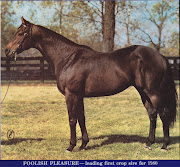
Have I mentioned before how much I love Jose Lezcano? I’m totally serious. I love the way this guy rides. In the American Dreamer Stakes at Calder today he rode 23-1 Pound Foolish to an ever-closing second place finish behind 2-1 favorite Grand Cash. What’s amazing about this finish is, with no equipment or trainer change, just Lezcano up for the first time, Pound Foolish placed for the first time in five turf efforts; there were plenty of reasons this 3-year-old gelding went off so long in a field of eleven. By Exchange Rate, out of the Mecke mare Kobella Bean (thus a Foolish Pleasure damline connection), homebred/owned/raced Pound Foolish broke his maiden on December 29, in his tenth start at age 2.

And speaking of jockeys who never fail to impress, Julien Leparoux is a magic man on turf. At Arlington today in the G2 American Derby, he rode a gem on Reb who was stuck behind literally a wall of horses, pulled him back and around them to close and nip No Inflation on the wire by a short head. Breathtaking! It was his second stakes victory of the day, as he also powered odds-on favorite Pure Clan to win the G3 Modesty.

Also among those horses whose achievements may get overlooked today is Goosey Moose, an 8-year-old Texas-bred gelding who won the Assault Stakes at Lone Star Park for the fourth time—in six years! As a 3-year-old, he first won this 8.5f race in 2004, and repeated in 2005, before a third-place finish in 2006 and another victory in 2007. He was unplaced last year, but swept to an impressive win today. Way to go, geezer! Let's hear it for the geldings!

Friday, July 10, 2009

Friday Miscellany

Devastating news from England—following a seventh-place finish behind the wildly-veering filly Fleeting Spirit in the G1 July Cup at Newmarket, sprint superstar Takeover Target is undergoing surgery to repair a cracked cannon bone in his left hind leg. For the soon-to-be 10-year-old gelding, this obviously appears career-ending, and certainly a Breeders’ Cup appearance at Santa Anita seems highly unlikely at this point. Hopefully, this isn’t a tragic ending to an otherwise fairy tale story. Takeover Target has won 8 G1 races on three continents, and placed in 7 others, winning over A$6 million in 41 lifetime starts.

Something you don’t see every day—half-siblings winning races on the same day at the same track. On Friday, Roberto Urrutia’s Mister Alimony (Skip Trial-War Goddess, by War) led wire-to-wire in Belmont’s race 1, while Ocean Goddess (Stormy Atlantic-War Goddess, by War) did nearly the same, winning race 3 for Thor-Bred Stable LLC.

And speaking of siblings (although not recognized in the traditional sense), what’s with owners/breeders Kenneth and Sarah Ramsey naming the progeny of their homebred stallion Kitten’s Joy the most uninspiring names? Let’s see, there’s Keith’s Kitten, William’s Kitten, Becky’s Kitten, and Dean’s Kitten (entered in race 5 at Belmont on Saturday), as well as Lisa’s Kitten and Jill’s Kitten who ran at Belmont on Friday (race 4). Even if they named them after every child and grandchild, it’s still insipid. Guess it’s all about advertising their stallion. As opposed to the unimaginative naming of their own horses, notice that one of the Kitten’s Joy fillies sold (by the Cox’s Ridge mare Elevate) was named by her owners Raise The Kitty. Now that’s finesse.

Thursday, July 9, 2009

America’s Derby

On Saturday, Arlington Park hosts its Million Preview Day, featuring the $200k Arlington Sprint (a Breeders’ Cup “Win And You’re In” Challenge race), the G3 Arlington Handicap, G3 Modesty Handicap, and G2 American Derby. The latter three are preps for Arlington’s premier turf races which will be run on August 8—the G1 Arlington Million, G1 Beverly D., and G1 Secretariat Stakes, respectively.

Yet, once upon a time, the American Derby was viewed as momentous in its own right, being from nearly its inception in the nineteenth century the richest race in the United States, and thus more prestigious than the Kentucky Derby. It also became a battleground for bragging rights between East and West:

The Southerners, the Californians, and the Easterners annually face each other there in this battle for three-year-olds, with their weights up, over a mile and a half of running; and this American Derby of ours annually presents to us one of the grandest outdoor sights to be seen in America..—Charles E. Trevathan, The American Thoroughbred (1905) p. 413

In his book, City of the Century: The Epic of Chicago and the Making of America (1997), Donald L. Miller mentions how the Washington Park Jockey Club meeting also served as an important social event for Midwesterners:

On the annual June running of the American Derby, the first call of summer to the fashionable set, they would gather with their families at the Hotel Richelieu on Michigan Avenue and form a cavalcade of shining carriages that would make its way out the boulevards to the racecourse, the walkways lined with spectators straining to catch a glimpse of a famous Chicago beauty or businessman. (p. 291)


The very first winner of the American Derby, in 1884, was a filly—Modesty, winner of the Kentucky Oaks. She was ridden by the great African-American jockey Isaac Murphy, who added three more American Derby victories to his oeuvre, one more than the number of Kentucky Derbies he won. Fascinatingly, Modesty, through her daughter Daisy F, was the grand-dam of the great Regret, the first filly to win the Kentucky Derby.

The great filly Black Helen, winner of the Coaching Club American Oaks and Florida Derby, won the 1935 American Derby, and CCAO victress Dawn Play followed up that achievement in 1937. The fourth and final filly winner was Askmenow (1943).

Over the years, several Kentucky Derby winners won the American Derby—first among them, Spokane (1889), the only Montana-bred to win the Kentucky Derby. The others include Cavalcade (1934), Whirlaway (1941), Citation (1948), Ponder (1949), Swaps (1955), and Forward Pass (1968). Among the other top 3-year-old American Derby winners were Hill Prince (1950), Native Dancer (1953), Swoon’s Son (1956), Round Table (1957), Tom Rolfe (1965), Buckpasser (1966), and Damascus (1967). The last classic winner to take the American Derby was 1985 Belmont Stakes victor Crème Fraiche.

Only since 1958 has Arlington hosted the American Derby. Originally run on dirt, the race has been run on turf since 1992 (and for a period during the 1950s and 1970s), so it’s unlikely we’ll see the same type of classic horses take on this race again, nor will it have the same importance it once did, particularly as it’s positioned as a prep for the G1 Secretariat. However, it is a race with a fascinating history.

A decade after its inaugural running in 1884, the American Derby was nearly no more, as the New York Times prominently announced on its October 15, 1894 front page: “No More American Derby. Chicago’s High-Class Jockey Club Abandons Racing.” The article elaborates upon the reasons, including “the popular clamor against poolselling and the degeneration of racing from a harmless and high-class sport to a species of gambling,” as well as uncertainty regarding the legality of operating a racetrack in the state of Illinois, as “the people who own Hawthorne are under indictment.”

After a three-year hiatus, the American Derby returned to Washington Park in 1898, as a crowd of 30,000 watched St. Louis Derby winner Pink Coat triumph. Alas, the days of Washington Park were numbered; the track closed in late 1904 due to enforcement of anti-betting laws, and the American Derby was held only once at Hawthorne in 1916, before going on another hiatus until 1926. Interestingly, that 1916 race was tightly regulated:

Strict precautions to prevent open betting at the track will be taken by promoters of the meet, with the co-operation of the Sheriff of Cook County. The latter has promised to have a force of deputies on hand to work with a squad of private detectives in enforcing the State laws [against gambling]. The meet, according to the promoters, is to be an honest attempt to restore racing here without the so-called evils. (“Derby at Chicago Today” NY Times, July 15, 1916, p. 7).

Talk about sucking the fun out of the event—still, the New York paper noted in its subsequent race summary that “betless though it may be” the event saw 20,000 people in attendance. Fourteen men were arrested by the Sheriff’s deputies and transported to the Oak Park police station on charges of gambling. Apparently, these were merely the careless as:

Despite the presence of Deputy Sheriffs in considerable numbers betting was indulged in by those who felt so inclined, and there was not a little activity in this connection. The betting was of the wink and nod variety, however. Thousands of dollars are said metaphorically to have changed hands by the mere raising of eyebrows. No money actually was passed….Officials of The Jockey Club disavowed any knowledge of betting, and no one seemed to know whence the odds emanated. (“Dodge Romps Home in American Derby” NY Times, July 16, 1916, p. 8).

Anti-gambling laws put the American Derby on hold for another 10 years, before 38,000 people welcomed the 1926 revival, and watched Boot to Boot (in his 12th start as a three-year-old) defeat Preakness victor Display over 1-1/2 miles, with Kentucky Oaks winner Black Maria in third. The $100,000 purse that day was the richest ever offered in America, although interesting the $89,000 winner’s share check bounced when Boot to Boot’s owner failed to hold it for two weeks, until the club adjusted its books (“Derby Check Returned” NY Times, August 13, 1926, p. 13).

Ever consistent with track owners who are masters of spin, it was announced the following year that since the $100,000 race “attracted only a mediocre field”, the 1927 American Derby purse would be cut to $25,000, hoping “that the glory of winning an American Derby again will overshadow its monetary value.” (NY Times, February 11, 1927, p. 26).

By 1931, the purse had risen to $50,000, when 40,000 people witnessed Preakness winner Mate nosed out Pittsburgher for the win. As the NY Times noted, amazingly considering it was the height of the Great Depression, approximately $975,000 was wagered on the race card, down from $1,123,000 in 1930. A board game for the race was also introduced that year.


Among other highlights:

• 1948 Triple Crown winner Citation went off at 1-10 odds when he won the American Derby on August 28.

• After winning the 1953 Travers on Native Dancer, his jockey Eric Guerin was suspended, so the American Derby marked the first race in which Eddie Arcaro rode the "Gray Ghost".

• Before Kentucky Derby winner Swaps met Preakness and Belmont victor Nashua in their great 1955 match race on August 31, Swaps tuned up by tying the U.S. turf record for 1-3/16 miles in winning the American Derby.

• In 1957, Round Table avenged his Kentucky Derby loss by defeating Iron Liege over the Washington Park turf.

• Out from March to June due to a quarter crack, Buckpasser came back to win the 1966 American Derby, carrying 128 lbs and conceding seven to eighteen pounds to his foes.

• Due to a temperature, Dr. Fager missed his matchup with foe Damascus who won the 1967 race with Willie Shoemaker aboard, his fifth and last American Derby victory (tied with Eddie Arcaro for most wins).

Sunday, July 5, 2009

Sunday Highlights

While Presious Passion’s dominating victory in the G1 United Nations on Saturday was ultimately the most impressive visually and in terms of setting a new course record (eclipsing the outstanding English Channel by nearly two seconds), the most surprising for me was Cat Moves winning the G1 Prioress over stablemate Light Green. As the most lightly-raced horse in the field, the Virginia-bred miss won a G1 in only her third outing, and surely would have gone off at much higher odds had she been uncoupled from the more seasoned Light Green. Looking deeper into her family though, there are plenty of quality sprinters including two-time Princess Rooney victress Gold Mover, as well as Rated Fiesty and Casanova Move. Still, I don’t think Indian Blessing has anything to worry about...yet.

On the other hand, Informed Decision recorded another facile victory, this time in the G3 Chicago Handicap, and looks a major threat for the Breeders’ Cup Filly & Mare Sprint over the Santa Anita plastic. Thankfully, Indian Blessing is switching to dirt for her next start, next weekend’s G1 Princess Rooney at Calder.

Speaking of speedy fillies, great to hear that Stardom Bound is back in training; she’s due to ship to New York on Monday.

Last seen running dead last over a sloppy Churchill track in November (and beaten by the likes of Miss Isella, Game Face, and Awesome Ashley, now six-year-old mare Fleetheart makes her 2009 debut on Wednesday (July 8) in an allowance race at Indiana Downs (race 8).

Sunday’s marquee race appears to be the G1 American Oaks at Hollywood, with a full field of 14 expected. While Gozzip Girl is the “buzz” horse (and rightly so), I’m certainly intrigued by Dermot Weld’s Rare Ransom (interestingly, her dam Rapid Ransom is a half-sister to Warrior Queen, dam of Santa Anita Derby-placed A.P. Warrior). With the California heat, I’m also thinking a more acclimatized selection might be wise, like Third Dawn. I’d likewise be thrilled if Aussie jock Glen Boss could boot home New Zealand filly Puttanesca for a win.

The G1 Triple Bend follows about one hour later, again with a full complement. I’m a big fan of Graham Motion’s Rebellion, and would love to see a victory by him here. Considering how well lightly-raced horses did on Saturday, I might take a couple looks at Bob Baffert’s Zensational who’s thrown a string of blazing works since his last start.

In Sunday’s other major sprint race, the G2 Tom Fool, I would just love to see Fabulous Strike win again, but the 7f is a real concern—not his optimum distance. However, he gets the rail, and Ramon Dominguez pulled a nice shocker with Cat Moves...can he pull this off? Baffert sends out Riley Tucker who, along with Driven By Success, may challenge Fabulous Strike early, but, considering Kensei’s upset in the G2 Dwyer, Munnings’ win last out looks even more impressive. I suspect it will be a battle royal between Fabulous Strike and Munnings that will go all the way to the wire—can’t wait to see it!

Saturday, July 4, 2009

Celebrating the Fourth of July

Fixin’ to enjoy the holiday with hamburgers and hot dogs on the grill, some cold brews and a full slate of stakes action from coast-to-coast. What more could a horse racing fan want (besides a Zenyatta vs. Rachel Alexandra showdown)?

At Belmont, the safe thing to do would be to go with the “Medaglia D’oro Daily Double”—Warrior’s Reward in the G2 Dwyer, and Gabby’s Golden Gal in the G1 Prioress. Instead, I’m thinking “Jerkens Exacta” in the Dwyer, with daddy Allen’s Masala over son Jimmy’s Convocation.

All the Dwyer hype has been about Calvin Borel riding Warrior’s Reward, but I’m just not sold on him. Likewise, Just Ben’s 2-1 morning line surprises me, since his dam Chip was a multi-graded stakes winning sprinter, as was his sire Speightstown—8.5f just may be well out of his reach, unless Rajiv Maragh gets him loose on the lead. Ramon Dominguez is the only positive thing about longshot Sunday Sunrise, and I’ll be surprised if Kensei can handle the stretch out in distance. American Dance’s best efforts have been when on or near the lead, but with much slower fractions than Just Ben should deal out. Instead, Masala and Convocation should both get plenty to run at. Masala’s poor turf effort two back in the Lamplighter is a complete toss-out for me, as his workouts and race since transferring from Todd Pletcher to Jerkens signal to me he’s been much better placed on dirt. (Incidentally, his dam Countess Marq is a half-sister to Diamonds and Legs, dam of the wonderful sprinting mare Wild Gams, runner-up in the 2006 Prioress.) Convocation is entered here off a maiden win, which is pretty ambitious for Jimmy Jerkens, but his last race (nearly one month ago) was very impressive—Convocation (Pulpit) is closely related to 2001 G1 Breeders’ Cup Juvenile Filly champion Tempera (A.P. Indy), as their dams are half-sisters.

In the Prioress, Gabby’s Golden Gal is the only G1 winner in the field, and has two bullet works leading to this. However, that was such a big effort, now she’s cutting back to 6f, and she won’t enjoy slow early fractions, particularly with Light Green and Heart Ashley in the field. Though her breeding indicates she should like more distance, Light Green has never raced beyond 6f—and never finished out of the money, including twice over this track. I give her a slight edge over Heart Ashley, both dirt speedballs. The shocker might be Larry Jones-trained On The Menu who has reeled off five consecutive blistering bullet works; she didn’t handle the off-track in last September’s G2 Matron, but she’s also grown up since then.

In the G2 Suburban, you can’t knock Asiatic Boy’s form, particularly gaining on Macho Again in the G1 Stephen Foster, and ahead of the unlucky Einstein. He should get plenty to run at with Finallymadeit on the rail—that one has put in two nice works at Belmont since the Stephen Foster, and could be dangerous here, if he doesn’t falter again. Interesting that Julien Leparoux chose not to come in and ride favorite It’s A Bird. Cool Coal Man could definitely get a piece of the exotics, but for a longshot I keep coming back to Real Merchant, if only because Rajiv Maragh rode him well two back.

In the G3 Salvator Mile at Monmouth, I love everything about Smooth Air—always have—but I wouldn’t be surprised if Coal Play pulled an upset, especially with Joe Bravo up. Two Step Salsa didn’t have an easy placement in his last race, finishing behind Fabulous Strike, Benny the Bull and Silver Edition. That form alone merits respect, as does seeing Garrett Gomez come in to ride.

With 10-year-old Better Talk Now withdrawn, that leaves 8-year-old Brass Hat as the resident geezer in the G1 United Nations, and wouldn’t it be something to see him win! However, last year’s winner Presious Passion has been in tremendous form this year, and Monmouth is his personal playground. Court Vision has run in nothing but G1 events since winning the G1 Hollywood Derby on turf last November; however, he also hasn’t won vs. older horses in four subsequent attempts. Therefore, if anyone catches Presious Passion, I’m betting it's Banrock (with his Foolish Pleasure second dam).

At Churchill, Thorn Song looks to repeat in the G2 Firecracker, coming in off that impressive victory in the G1 Shoemaker Mile, but I’m willing to take a moderate stand against him. While G1 Makers Mark Mile winner Mr. Sidney looks likely on paper, I’m much more interested in Passager and Wise River, the latter who is particularly fond of Churchill turf.

I'll probaby be Twittering while handicapping other races, so tune in for any changes of heart.

Happy Birthday, America!